
Aviation Connect
Log in Sign up free
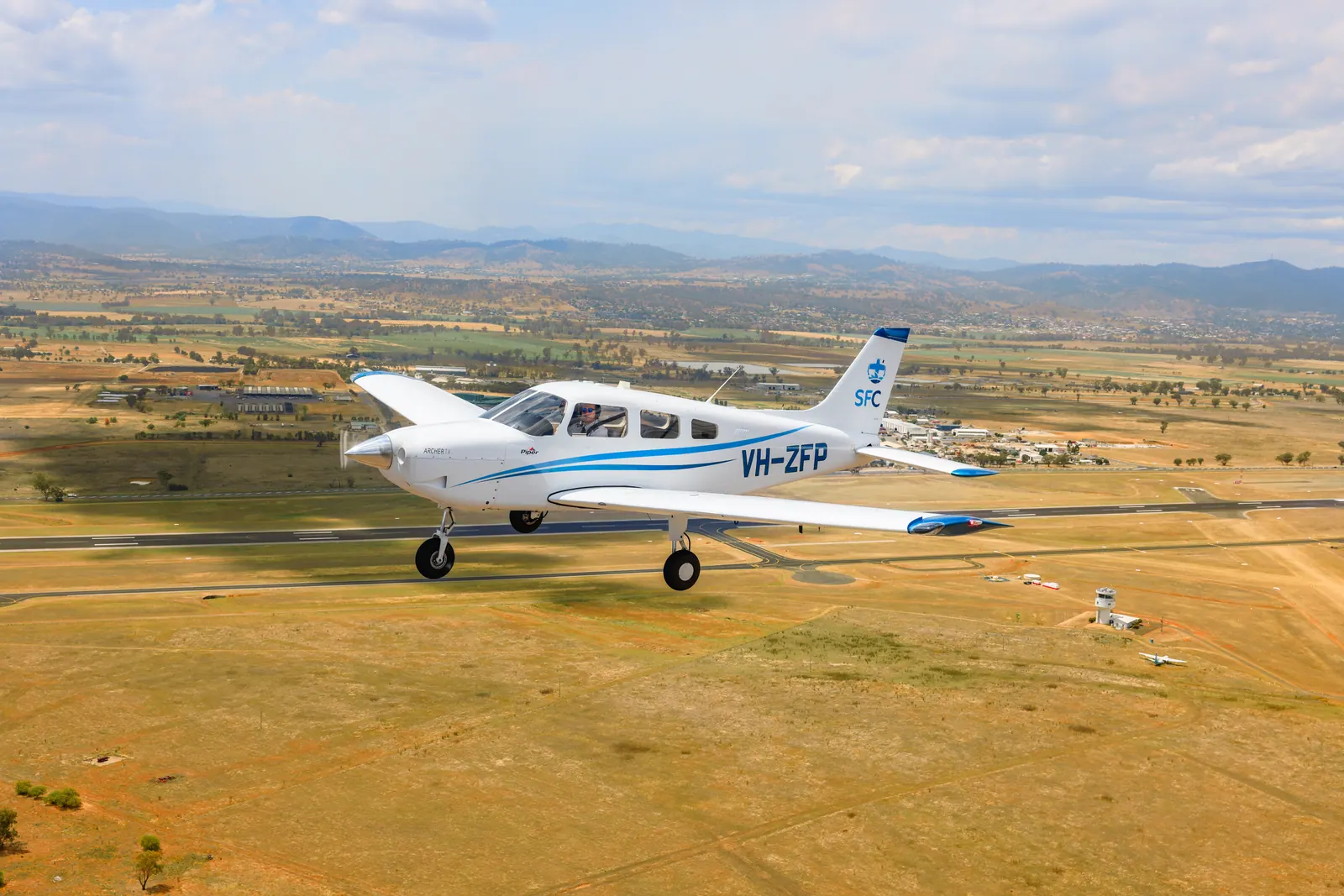
A training aircraft over the plains of central Spain

Country guide

Spain

Europe

One all-inclusive fee, one EASA license: integrated training in Burgos with accommodation and meals in the price.

  • EUR 76.1k–81.4k Total budget, estimated
  • 14 Months of training
  • EASA CPL (frozen ATPL) License
  • Estancia por estudios Student visa

01 Overview

Flight training in Spain.

Spain is a popular place to train for an EASA licence, and for an international student its appeal is easy to explain: the licence is the standard EASA one, valid across the EU plus Iceland, Liechtenstein, Norway and Switzerland, and the price can be a single number. FlyBy Aviation Academy, which trains from Burgos and Logroño and describes itself as the largest approved training organisation in Spain, sells its integrated ATPL for training only or all-inclusive: the training, your own room, three meals a day and the airport shuttle in one fee.

Key facts

Primary license
EASA CPL with multi-engine instrument rating and frozen ATPL, valid across the EU plus Iceland, Liechtenstein, Norway and Switzerland
Typical duration
From 14 months (integrated ATPL at FlyBy)
Course fee (integrated ATPL at FlyBy)
From EUR 69,500 training only (about USD 77,900), from EUR 79,500 all-inclusive (about USD 89,100)
English requirement
ICAO Level 4 (training in English, Spanish not required)
Medical requirement
EASA Class 1 medical (AESA-accredited AeMC)
Training base
Burgos (LEBG) and Logroño-Agoncillo (LELO), northern Spain
Visa for non-EU students
Long-stay study visa (estancia por estudios) plus TIE residence card; 18 or older for pilot training
Regulator
AESA (Agencia Estatal de Seguridad Aerea), under EASA rules

Coming home with this license? See what your home country asks for a license conversion.

02 Costs

What training in Spain costs.

FlyBy publishes two prices for its integrated ATPL from 14 months: from EUR 69,500 (about USD 77,900) for training only, and from EUR 79,500 (about USD 89,100) all-inclusive. The training covers the flying, simulators, upset prevention and recovery training (UPRT), night VFR, the airline-standard MCC course, uniform and equipment. The all-inclusive package adds your own room in student housing in Burgos or Logroño and three meals a day, seven days a week, for 14 months, and the shuttle to the airfield for 12 months; its list also names the initial Class 1 medical, one attempt at each ATPL theory exam, two skill tests and a headset, so ask whether the training-only price covers those.

The EUR 10,000 gap between the two pays for the room, the meals, the shuttle and whatever else the all-inclusive list adds. In Burgos a room in a shared flat costs about EUR 200-300 a month plus bills, and food about EUR 220 a month (April 2025), so the all-inclusive package is less about saving money than about knowing the total in advance. When you compare schools, compare what each number contains, not the number itself.

Outside either package: the visa and residence card, health insurance, your flights to Spain, personal spending, any exam resits and, later, any licence conversion at home. Budget for those separately. FlyBy also sells a Cadet Program that adds a flight instructor course and a 12 month instructor contract at FlyBy (FlyBy sets its conditions and does not say whether it is paid), from EUR 91,400 (about USD 102,500).

Estimated costs · EUR

  • Course fee: integrated ATPL at FlyBy From EUR 69,500 (about USD 77,900) for training only, without room, meals or airport transport. From EUR 79,500 (about USD 89,100) all-inclusive: your own room in student housing in Burgos or Logroño and three meals a day for 14 months, the airport shuttle for 12 months, the initial Class 1 medical, one attempt at each ATPL theory exam and two skill tests. Confirm the current package and exactly what it contains with the school before signing. Estimated range EUR 69,500–79,500
  • Rent and food (training-only package) Nothing on the all-inclusive package. On the training-only package, plan for this every month of the course. In Burgos a room in a shared flat costs about EUR 200-300 a month plus gas, electricity and other bills, and food about EUR 220 a month; a room with a family with full board costs about EUR 750 a month (April 2025, about USD 470-840). Bills and local transport come on top. Estimated range EUR 420–750 per month
  • Leisure and personal spending Leisure costs about EUR 120-150 a month in Burgos (April 2025); phone, clothes and travel come on top. Applies on either package. Estimated range EUR 120–150 per month
  • EASA Class 1 medical (initial) Included in the FlyBy all-inclusive package. Otherwise you pay the centre directly; the centres do not publish their prices, so ask for a quote. The initial examination must be done at an aeromedical centre (AeMC). Do it BEFORE you pay any tuition deposit. Estimated range Not listed
  • Student visa and TIE residence card The consular fee for the visa is EUR 90, or its equivalent in local currency, for most nationalities; some nationalities pay a different reciprocal fee, and visa centres add a service fee. On top come the TIE card fee in Spain, sworn translations into Spanish, apostilles and the criminal record certificate, which vary by country. Estimated range EUR 90
  • Health insurance Health insurance from an insurer authorised in Spain, with cover similar to Spain's public health system and valid for the whole stay, is a visa requirement. Travel insurance is not accepted. Prices depend on the insurer and the policy, so ask for quotes and check the exact cover your consulate asks for. Estimated range Not listed per year
  • ATPL exam fees and resits The FlyBy all-inclusive package pays one attempt at each ATPL theory exam and two skill tests, so this is only resits. On the training-only package, ask the school what the fee covers and what a resit costs. Estimated range Not listed
  • Flights and initial setup Return flights from Asia-Pacific plus the first weeks of setup. The cost depends on where you fly from and when, so price it for your own route. Estimated range Not listed

Figures checked on 1 Nov 2026: verify every figure with the school before you commit. The estimated total budget adds the course fee, 12 months of living costs (rent, food and leisure on the training-only package, leisure on the all-inclusive package) and the visa fee; it leaves out the TIE card fee, health insurance, flights and, on the training-only package, the medical and exam fees, because no official figure is listed for them. A longer course adds the living costs of the extra months. FlyBy's prices and package contents, Spanish visa fees and the IPREM change, so check the visa requirements with the Spanish consulate for your country. USD figures use the exchange rate on our site in October 2026.

Your own total for the route and the school you have in mind, living costs included: an honest range in about 30 seconds, no email needed.

Compare all countries: How much does pilot training cost?

Estimate your budget for Spain

03 Visa

Your student visa for Spain.

Spain is in the EU and the Schengen Area. Non-EU students staying longer than 90 days need a long-stay study visa (estancia por estudios), applied for at the Spanish consulate or visa centre for the country where you live once the school has accepted you. For a stay over six months you then request a TIE residence card at the police within one month of arrival.

Spain's immigration rules changed on 20 May 2025 (Royal Decree 1155/2024). Pilot training at a flight school is not a university degree, so it comes under the rules' training activities, which include training that leads to a professional licence. On that route you must be 18 or older, the permit runs for up to a year and is then extended once in Spain, and it does not include the right to work. FlyBy itself accepts applications from 17, so you can apply to the school at 17, but you need to be 18 for the visa. Confirm the category with the consulate when you apply.

The financial requirement is 100 percent of the IPREM for every month of the stay, EUR 600 a month in 2026 (about USD 670), so EUR 7,200 (about USD 8,100) for a year. Money set aside for tuition does not count towards it. The rules make an exception when you prove that your accommodation is paid in advance for the whole stay, so ask FlyBy whether its all-inclusive package gives you that proof, and the consulate what it then expects. Apply at least two months before the course starts; three to four months is safer. The school and your Aviation Connect advisor walk you through the document list.

Estancia por estudios

Long-stay study visa for stays over 90 days

The route for the full integrated course. Apply at the Spanish consulate or visa centre for your country of residence at least two months before the start, once the school has accepted you. For a stay over six months you then request a TIE residence card at the police within one month of arrival. For pilot training the permit runs for up to a year and is extended once in Spain, which covers a course from 14 months.

Who can apply

  • Aged 18 or older: the training route has no exception for minors, even though FlyBy accepts applications from 17
  • Acceptance letter from the school and proof that the registration or course fee is paid
  • Proof of funds of 100 percent of the IPREM, EUR 600 a month in 2026, for the stay, on top of the money for tuition
  • Public or private health insurance from an insurer authorised in Spain, with cover similar to Spain's public health system, valid for the whole stay; travel insurance is not accepted
  • Criminal record certificates from every country you lived in during the last five years, legalised or apostilled and translated into Spanish
  • Medical certificate confirming you carry no disease with serious public health implications under the International Health Regulations
  • Passport valid for at least one more year
Schengen C

Short-stay route for courses under 90 days

Only relevant for a short module such as a type rating, an MCC course or a time-building block. Passport holders of, among others, Australia, Brunei, Hong Kong, Japan, Malaysia, New Zealand, Singapore, South Korea and Taiwan enter visa-free for up to 90 days in any 180-day period; most other nationalities in Asia-Pacific need a Schengen visa, which costs EUR 90. Visa-free travellers will also need an ETIAS travel authorisation once the EU launches it. This route cannot be stretched to cover a full pilot course, so do not plan to switch to a study permit from inside Spain.

Who can apply

  • Course confirmed as shorter than 90 days
  • Return travel booked within the 90-day window
  • Travel medical insurance covering the Schengen Area
  • Proof of funds for the stay

04 Requirements

English and medical: what you need.

English

Training at FlyBy is conducted in English and Spanish is not required at any point in the licence. Requirements:

  • For the licence: ICAO English Language Proficiency Level 4 or above, tested and endorsed on the licence. Level 4 needs re-validating every four years, Level 5 every six, Level 6 never.
  • For admission: FlyBy asks for ICAO Level 4 as a minimum and tests English, mathematics, physics and personality in its own admission tests, because ATPL theory is taught and examined in technical English from day one. FlyBy is also an ICAO English test centre.
  • For the visa: Spain sets no English requirement. The consulate cares about funds, insurance and enrolment.

Daily life in Burgos runs mostly in Spanish, since it is a working Castilian city rather than a tourist resort. That is a genuine plus for immersion and a small practical hurdle in the first weeks. Learning basic Spanish is not required, but a few months of basics make the year noticeably easier.

Medical

You need an EASA Class 1 medical certificate, the strictest EASA level, required for all commercial flying. It is governed by Part-MED under Regulation (EU) 1178/2011 and overseen in Spain by AESA. FlyBy asks for a Class 1 without limitations.

  • The initial examination can only be done at an aeromedical centre (AeMC), not by an individual aviation doctor. AESA lists about 14 accredited centres in Spain (October 2026), among them CIMA in Torrejón de Ardoz near Madrid; the closest to Burgos is near Bilbao. Plan for most of a day.
  • Cost: the FlyBy all-inclusive package includes the initial examination. Otherwise you pay the centre directly; prices vary, so ask for a quote. Renewals can also be done by an authorised aeromedical examiner (AME).
  • Eyesight: glasses or contact lenses are not automatically a problem. Distant vision must reach 6/9 in each eye and 6/6 with both eyes, with or without correction, and colour vision is tested.

Do this before you pay a tuition deposit. The Class 1 is the one requirement that can end a career plan before it starts, and eyesight, hearing, cardiovascular findings and some medical histories are the usual reasons. If there is no EASA-certified centre near you, a Class 1 examination by your own aviation authority is a sensible early screening; the EASA initial then follows in Spain.

What the medical and the English test involve: read the guide.

05 Training there

Training and living in Spain.

Worth knowing

One price that includes room and meals

FlyBy's all-inclusive price, from EUR 79,500, covers the training, your own room and three meals a day for 14 months, the airport shuttle, the initial Class 1 medical, one attempt at each ATPL theory exam and two skill tests. Its own training-only price, from EUR 69,500, shows what those extras cost: about EUR 10,000. That changes how you should read every competing offer: a lower tuition figure elsewhere is only lower if the rent, food, exams and medical behind it are too. Families supporting a student from Asia-Pacific feel this most: an all-inclusive number can be planned for in advance, while a tuition-only number leaves an open-ended monthly bill in a foreign currency. Ask every school on your shortlist for a written list of what is and is not included, then compare the totals.

Why students choose Spain

  1. Flying conditions

    FlyBy says its airports at Burgos and Logroño have low traffic density and stable year-round operations. A course that takes longer adds the living costs of the extra months.

  2. The standard EASA licence

    A CPL earned in Spain is the same EASA licence as one earned in Germany or France, valid across the EU plus Iceland, Liechtenstein, Norway and Switzerland, with the same established conversion routes into Asia-Pacific regulators.

  3. Scale

    FlyBy describes itself as the largest ATO in Spain, with more than 45 aircraft and students from more than 115 nationalities.

  4. A city that is not expensive

    Burgos is a small northern city: a room in a shared flat costs about EUR 200-300 a month plus bills, and food about EUR 220 a month (April 2025).

From first call to Spanish airspace

  1. Pass the Class 1 medical first At an EASA-certified aeromedical centre. If none is near you, a Class 1 check by your own aviation authority is a sensible first screening. Everything else depends on it, and it is the cheapest step to fail.
  2. Confirm the package in writing Ask FlyBy for the current fee and an itemised list of inclusions and exclusions. Compare like for like against your other shortlisted schools.
  3. Secure your place and get the acceptance letter The consulate will not start without it. Our free school advisory explains each step.
  4. Apply for the student visa At least two months ahead, better three to four. You must be 18 or older. Funds of EUR 600 per month of the stay, health insurance from an insurer authorised in Spain, apostilled criminal record, medical certificate.
  5. Arrive and request the TIE At the police within one month of entry. Before the first year ends, extend your permit in Spain. Ask the school what help it gives with the appointments and the paperwork.
  6. Start training, then plan the conversion From 14 months to a frozen ATPL. Talk to your advisor about the conversion route home well before you finish, not after.

The honest caveats

Two things worth knowing before you commit.

First, work: under the rules in force since May 2025, students in higher education may work up to 30 hours a week without a separate permit, but pilot training at a flight school is not higher education, so a job needs its own work authorisation, and an intensive integrated course leaves little room for one anyway. Treat any income as a bonus, never as part of your funding plan. FlyBy also runs a three-year pilot degree with the University of Burgos. If that route interests you, ask your advisor, and confirm its visa and work rules with the consulate.

Second, Burgos is not Barcelona. It is a small, cold-winter Castilian city with a magnificent cathedral and a quiet social scene, and daily life happens in Spanish. For a focused 14 months that is arguably ideal, but go in knowing it, not expecting a coastal resort.

07 7 questions

Questions about training in Spain.

Is the all-inclusive price really everything?

Close to it.

FlyBy's all-inclusive integrated ATPL, from EUR 79,500, covers the training (flying, simulators, UPRT, night VFR and the airline-standard MCC course), study materials, an iPad, a headset, uniform, your own room in student housing in Burgos or Logroño and three meals a day for 14 months, the airport shuttle, the initial Class 1 medical, one attempt at each ATPL theory exam and two skill tests.

It does not cover the visa and TIE card, health insurance, your flights, personal spending, exam resits or a later licence conversion. The training-only package, from EUR 69,500, leaves out the room, meals and transport.

Ask for the current inclusions in writing before you sign; packages change, and the written list is what you can hold them to.

How does the visa process work?

Once the school accepts you, you apply for a long-stay study visa at the Spanish consulate or visa centre for your country, at least two months before the course starts.

Under the rules in force since May 2025, pilot training counts as a training activity, so you must be 18 or older and the permit runs for up to a year, then is extended once in Spain.

You need proof of funds of 100 percent of the IPREM, EUR 600 a month in 2026, on top of the tuition money; health insurance from an insurer authorised in Spain, valid for the whole stay; criminal record certificates for the last five years, apostilled and translated; and a medical certificate.

Within one month of arriving you request the TIE residence card at the police. Start three to four months ahead.

Do I need to speak Spanish?

Not for the licence. Training at FlyBy is in English, air traffic control at international airports operates in English, and the EASA requirement is ICAO English Level 4. Daily life in Burgos is another matter: it is a working Spanish city rather than a tourist town, so shops, buses and offices run in Spanish.

You will manage without it, and you will have a better year with a few months of basics behind you.

Will my EASA licence convert back home in Asia-Pacific?

Most Asia-Pacific regulators have a conversion route for EASA licences, among them Hong Kong (CAD), India (DGCA), Indonesia (DGCA), Vietnam (CAAV) and Thailand (CAAT). Conversion usually means the country's own theory exams plus a flight check; cost and time vary by country, so ask your advisor to map the route before you start.

For Indian students FlyBy also runs a programme that adds the DGCA conversion in India. Because AESA issues it under EASA rules, it converts as one earned in any other EASA state would.

Can I work alongside the course?

Plan as if you cannot. Since May 2025, students in higher education may work up to 30 hours a week without a separate permit, but pilot training at a flight school is not higher education, so a job would need its own work authorisation.

An integrated ATPL from 14 months is genuinely full-time anyway: theory blocks, flight slots that move with the weather, and examinations. If part-time work is essential to your plan, raise it with your advisor before you commit.

Why Burgos rather than a coastal school?

Airspace and focus. FlyBy flies from Burgos and Logroño, two airports with low traffic density, and northern Spain still flies year-round. The city is small, and a room in a shared flat costs about EUR 200-300 a month plus bills (April 2025).

Winters are colder than the Mediterranean image of Spain suggests. For an intensive 14 months, a quiet base is usually an advantage.

What happens if I fail the Class 1 medical?

Ideally you find out before you pay a tuition deposit, which is why the medical comes first. The initial can only be done at an aeromedical centre (AeMC); in Spain that means one accredited by AESA, and the FlyBy all-inclusive package pays for it.

Some findings are disqualifying, many are not, and a number are correctable or subject to a limitation that still permits commercial flying. If something is flagged, talk to your advisor before assuming the career is closed.

Our school advisory is free for students

Questions about Spain?
Talk it through with us.

One call with an advisor about the schools, the visa and the costs in Spain. Free for students, and you decide.

Free for students Create free account